Jingdezhen Blue and White Porcelain Vase "from the Kangxi period of the Qing Dynasty

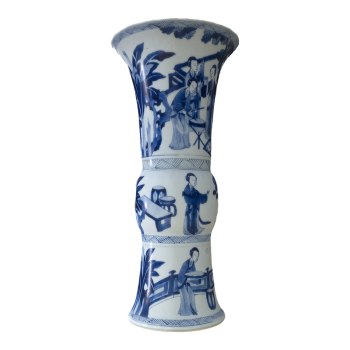
Jingdezhen Blue and White Porcelain Vase "from the Kangxi period of the Qing Dynasty

This Chinese cultural relic is a porcelain vase from the Kangxi period of the Qing Dynasty (1662-1722). The vase is made of transparent and colorless underglaze blue and white porcelain with cobalt pigment, fired in Jingdezhen, and is now collected in the Smithsonian Museum.
Terracotta Warriors and Horses of the Qin Dynasty

Terracotta Warriors and Horses of the Qin Dynasty

The Terra Cotta Warriors, namely the Terra Cotta Warriors in the the Mausoleum of the First Qin Emperor, also referred to as the Terra Cotta Warriors or the Terracotta Warriors, are among the first batch of national key cultural relics protection units and the first batch of Chinese world heritage sites. A charioteer refers to a soldier on a chariot, excluding the rider and driver. There are usually two soldiers on a chariot, namely the left chariot figurine and the right chariot figurine. The figurine on the left side of the carriage is dressed in a long robe, covered in armor, with leg guards on the shin and a crossbeam on the head. It holds weapons such as spears, spears, and halberds in its left hand, and presses the carriage in its right hand. The attire of the figurine on the right side of the car is the same as that of the figurine on the left side, but the posture is opposite. They are both the main force of tank warfare, but according to literature records, they have certain differences in weapon configuration and combat responsibilities.
Standing Arhat, a statue in the Song Dynasty

Standing Arhat, a statue in the Song Dynasty

This Chinese cultural relic is a sculpture named "Upright Arhat", which is a Chinese work in the 6th century AD. This sculpture is currently housed in the Minneapolis Museum of Art in the United States.
Bronze vessels from the Eastern Zhou Dynasty, such as the Bronze Shengding

Bronze vessels from the Eastern Zhou Dynasty, such as the Bronze Shengding

This Chinese cultural relic is a bronze vessel called "Shengding", which was cast around 575 BC. Shengding "refers to a type of tripod with a flat bottom and a prominent waist. The word 'sheng' refers to the offerings provided within it. There are six Kui dragons climbing towards the lid in high relief around the body of the Ding. The surface is decorated with interwoven dragons, engraved with scale patterns, and overlapping feather like patterns. Although most of the decorations are made using traditional block casting bronze techniques, the six dragons, with their complex, perforated shapes, were individually crafted using the lost wax method. This cauldron is currently housed in the Minneapolis Museum of Art in the United States.
Bronze artifact from the Qin Dynasty, 'Qin Yangling Tiger Talisman'

Bronze artifact from the Qin Dynasty, 'Qin Yangling Tiger Talisman'

The Qin Yangling Tiger Talisman, a bronze artifact of the Qin Dynasty, was a military talisman issued by Emperor Qin Shi Huang to the guards of Yangling. It is said to have been unearthed in Lincheng, Zaozhuang City, Shandong Province and is now housed in the National Museum of China. The Qin Yangling Tiger Talisman is 8.9 centimeters long, 2.1 centimeters wide, and 3.4 centimeters high, in the shape of a lying tiger, which can be divided into two parts. The left and right neck backs of the tiger each have the same 12 character engraved gold seal script: "The talisman of the armored soldiers is on the right side of the emperor and on the left side of Yangling." Due to its age, the mating area has rusted to death and cannot be separated.
Bronze ware from the Shang Dynasty, titled 'Fuhao Haozun'

Bronze ware from the Shang Dynasty, titled 'Fuhao Haozun'

This cultural relic is a bronze vessel called "Fuhao Haozun", which is one of the two owl shaped statues from the Shang Dynasty. This owl shaped statue was discovered in 1976 at the Fuhao Tomb in Anyang City, Henan Province, China. The owl shaped statue is divided into two parts: the detachable owl head and the hollow body of the bird. Animal shaped vessels are almost the only known bronze sculptures from the Shang Dynasty. This owl is one of the oldest and most naturalistic surviving owl shaped statues. Its form showcases the influence of Anyang, the capital of the Shang Dynasty, in the north, but the style and casting techniques of the vessels indicate that it is related to the bronze tradition of the Yangtze River region in southern and central China. The cultural relics are currently collected in the National Museum of China.
Bronze ware from the Shang Dynasty, known as the 'Bronze Pavilion'
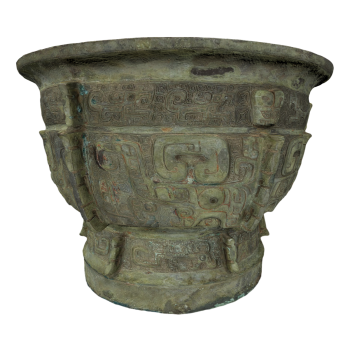
Bronze ware from the Shang Dynasty, known as the 'Bronze Pavilion'

This Chinese cultural relic is a wine vessel called "斝", produced in the 13th to 12th centuries BC. It is collected at the Minneapolis Museum of Art in the United States. 斝 is a ceremonial vessel used for ancestor worship, which is made of both pottery and copper. It can be quadrupedal or quadrupedal, with two cylindrical protrusions on the mouth edge, which may be used to hang the vessel above a heat source. Yan first appeared in the Neolithic Age (5000-2000 BC) and was very common in the Shang and early Western Zhou dynasties, but disappeared in the mid Western Zhou period.
Bronze vessels from the Western Zhou Dynasty, "Western Zhou Bronze Tripod"

Bronze vessels from the Western Zhou Dynasty, "Western Zhou Bronze Tripod"

This Chinese cultural relic is a tripod (food utensil) from the 12th to 11th centuries BC, currently housed in the Minneapolis Museum of Art in the United States. This tripod is a vessel designed by craftsmen during the Western Zhou Dynasty in the form of the Shang Dynasty. The main body of the tripod is a standard tripod, deep bowl shaped, while the circular handles on both sides are innovatively presented in the shape of elephant heads and trunks. Li is a type of food utensil in ancient China, mainly used for cooking and worship. This Li is a masterpiece from the Western Zhou Dynasty, with exquisite craftsmanship.
Limestone relief Buddha statues from the Shunzhi period of the Qing Dynasty in the 17th century
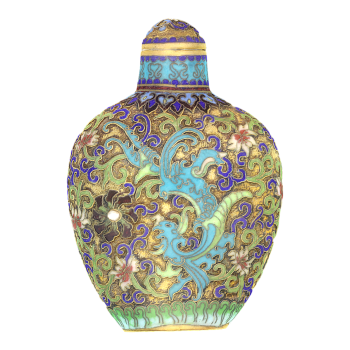
Limestone relief Buddha statues from the Shunzhi period of the Qing Dynasty in the 17th century

Enamel snuff bottles from the Yongzheng period of the Qing Dynasty in the 18th century

Enamel snuff bottles from the Yongzheng period of the Qing Dynasty in the 18th century

A snuff bottle is a container for holding snuff, which is delicate, compact, and easy to carry. During the Qing Dynasty, inhaling snuff became a popular trend among all social classes, and the pursuit of the material and craftsmanship of snuff bottles was even more extreme. The National Palace Museum in Taipei has a large collection of the most exquisitely crafted snuff bottles from the Qing Dynasty. This Yongzheng style enamel snuff bottle is made of milky white glass in the shape of bamboo nodes, with a color resembling spotted bamboo. There are brown spots on the green and yellow ground, and two small insects on the bamboo nodes. The bottom is painted with Lingzhi Kai Guang, and the red version of the regular script "Made in Yongzheng Year" is inside.
Painted ivory sculptures from the Qing Dynasty

Painted ivory sculptures from the Qing Dynasty

Folding Fan of Bull Bone Paper during the Qing Dynasty

Folding Fan of Bull Bone Paper during the Qing Dynasty

Bronze artifact from Sanxingdui during the ancient Shu Kingdom period, titled 'Bronze Beast Head Crown Portrait'

Bronze artifact from Sanxingdui during the ancient Shu Kingdom period, titled 'Bronze Beast Head Crown Portrait'

The cultural relic is a bronze artifact from Sanxingdui, measuring 40.2 centimeters in height, 23.3 centimeters in width, and weighing 3 kilograms. It was produced in Sanxingdui between 1250-1100 BC. This cultural relic was excavated in the second pit of Sanxingdui and is now collected in the Sanxingdui Museum with the collection number 0028. The Sanxingdui Museum is located in Guanghan City, Sichuan Province and is a public heritage museum. The museum is located at the northeast corner of the Sanxingdui site, near the Duck River in the western part of Guanghan City. The museum is 38 kilometers away from Chengdu. The infrastructure of the museum began construction in August 1992 and was officially opened to the public in October 1997.
The Bronze Bell "Niu Zhong" from the Eastern Zhou Dynasty in China

The Bronze Bell "Niu Zhong" from the Eastern Zhou Dynasty in China

This bronze bell is a cultural relic from the Eastern Zhou Dynasty in China, made in the 5th century BC. The name of this clock is "Niu Zhong", which was discovered in Henan Province, China. This clock is housed in the British Museum. During the Eastern Zhou Dynasty, bronze bells were a very important part. Clocks did not have bell tongues and needed to be struck with wooden hammers to produce sound. This type of clock has excellent quality in music, such as clear sound, fast attenuation, clear and focused tones. The height of the clock is 38.3 centimeters and the width is 24.4 centimeters. There are three rows of snake shaped decorations on each side, further divided by trapezoidal panels with faint dragon patterns.
The Golden Wood Carving of Compassionate Avalokitesvara from the Jin Dynasty
The Golden Wood Carving of Compassionate Avalokitesvara from the Jin Dynasty

This Bodhisattva statue is a cultural relic in Shanxi Province, China, from the Jin Dynasty, around 1200 AD. Its name is "Avalokitesvara of Mercy". The decoration of the statue is very fine, made of wood, with traces of gold and multi-color on it. The statue is the image of the Bodhisattva of Guan Shi Yin, who is the Bodhisattva of compassion. Bodhisattvas are the central element of Mahayana Buddhism. They are people who have reached a high degree of enlightenment. They help others to reach enlightenment and postpone their own enlightenment on the road to Buddhism. This work shows two intertwined dragons and a remarkable necklace. This statue is now in the Museum of Art History in Brussels, Belgium.
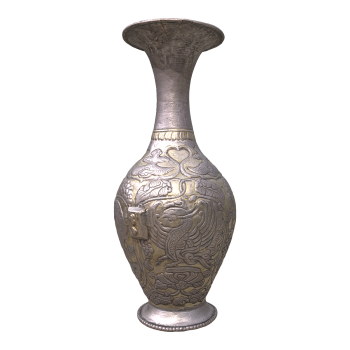
Tibetan silver vase during the Tang Dynasty "Tibetan gold-plated silver vase"

Tibetan silver vase during the Tang Dynasty "Tibetan gold-plated silver vase"

This vase is a cultural relic of the early 8th century AD from Tibet. Its name is "gold-plated silver vase". The decoration of this vase is very fine, mainly with Central Asian elements, including grape vines, bead edges and heart patterns. Sogite craftsmen are known to be adept at using gilded foil to set off silver relief designs. The form of the animal head-shaped drinking utensils and the use of silver are derived from Persian origins, while the rich, luxurious texture of the design and the form of the lion and the curly dragon on the side of the vase show an understanding of the Chinese form, which is proved in the early stage of political unity and integration in Tibet. This vase is now in the collection of the Cleveland Museum of Art.
Pottery Figurines of the Zodiac in the Northern Wei Dynasty: Pottery Figurines Dog

Pottery Figurines of the Zodiac in the Northern Wei Dynasty: Pottery Figurines Dog

The Terracotta Warriors of the Twelve Palaces is a work of the Northern Wei Dynasty in China, made in the 500 AD era. This terracotta figure is made of gray terracotta, and there are traces on the surface that show that it was coated with slippery soil. This pottery figurine is part of the Zodiac series, and the animals represent the traditional concept of time in ancient China. This group of pottery figurines is currently in the collection of the Cleveland Museum of Art. The pottery figurines of the Northern Wei Dynasty showed the great confluence of the farming culture of the Han nationality in the Central Plains and the nomadic culture of the northern grassland at that time, as well as the new look of ancient pottery under the influence of the flourishing Buddhist statues and sculptures.
Pottery Figurines of the Zodiac in the Northern Wei Dynasty: Pottery Figurines Dragon

Pottery Figurines of the Zodiac in the Northern Wei Dynasty: Pottery Figurines Dragon

The Terracotta Warriors of the Twelve Palaces is a work of the Northern Wei Dynasty in China, made in the 500 AD era. This terracotta figure is made of gray terracotta, and there are traces on the surface that show that it was coated with slippery soil. This pottery figurine is part of the Zodiac series, and the animals represent the traditional concept of time in ancient China. This group of pottery figurines is currently in the collection of the Cleveland Museum of Art. The pottery figurines of the Northern Wei Dynasty showed the great confluence of the farming culture of the Han nationality in the Central Plains and the nomadic culture of the northern grassland at that time, as well as the new look of ancient pottery under the influence of the flourishing Buddhist statues and sculptures.
Pottery Figurines of the Zodiac in the Northern Wei Dynasty: Pottery Figurines Rat

Pottery Figurines of the Zodiac in the Northern Wei Dynasty: Pottery Figurines Rat

The Terracotta Warriors of the Twelve Palaces is a work of the Northern Wei Dynasty in China, made in the 500 AD era. This terracotta figure is made of gray terracotta, and there are traces on the surface that show that it was coated with slippery soil. This pottery figurine is part of the Zodiac series, and the animals represent the traditional concept of time in ancient China. This group of pottery figurines is currently in the collection of the Cleveland Museum of Art. The pottery figurines of the Northern Wei Dynasty showed the great confluence of the farming culture of the Han nationality in the Central Plains and the nomadic culture of the northern grassland at that time, as well as the new look of ancient pottery under the influence of the flourishing Buddhist statues and sculptures.
Ink Cake "Panlong Ink Cake" during Jiaqing Period of Qing Dynasty

Ink Cake "Panlong Ink Cake" during Jiaqing Period of Qing Dynasty

This piece of ink cake is from China during the Jiaqing period (1795-1820) of the Qing Dynasty. The ink cake was green and shaped like a spiralling dragon. Ink cake (also called ink block) is dissolved in water and then ground into liquid ink on the surface of a square stone, which is used in painting and calligraphy. However, this precious piece of ink cake has never been used. the inscription on the side of the blue ink cake says that this set of ink cake was commissioned by governor chen huai of jiangxi province. This inset box is now in the collection of the Cleveland Museum of Art.
Qing Dynasty Ivory Sitting Pier "Small Ivory Characters Embroidered Pier"

Qing Dynasty Ivory Sitting Pier "Small Ivory Characters Embroidered Pier"

The work is from the Qianlong period (1736-95) of the Qing Dynasty (1644-1911). At the age of the Qing dynasty, luxury goods became more popular and affordable, including merchants and literati in unofficial positions. The growing urban population has encouraged the consumption of luxury goods and local crafts. This piece of ivory carved and painted to imitate a small garden chair shows the exquisite skills of the talented craftsmen of the Qing Dynasty, the craft of embroidering figure patterns, which combines embroidery and furniture making, showing the unique charm of traditional Chinese handicrafts. This sill is currently in the collection of the Cleveland Museum of Art.
Pottery Figurines of the Zodiac in the Northern Wei Dynasty: Pottery Figurines Pig

Pottery Figurines of the Zodiac in the Northern Wei Dynasty: Pottery Figurines Pig

The Terracotta Warriors of the Twelve Palaces is a work of the Northern Wei Dynasty in China, made in the 500 AD era. This terracotta figure is made of gray terracotta, and there are traces on the surface that show that it was coated with slippery soil. This pottery figurine is part of the Zodiac series, and the animals represent the traditional concept of time in ancient China. This group of pottery figurines is currently in the collection of the Cleveland Museum of Art. The pottery figurines of the Northern Wei Dynasty showed the great confluence of the farming culture of the Han nationality in the Central Plains and the nomadic culture of the northern grassland at that time, as well as the new look of ancient pottery under the influence of the flourishing Buddhist statues and sculptures.
Pottery Figurines of the Zodiac in the Northern Wei Dynasty: Pottery Figurines Chicken

Pottery Figurines of the Zodiac in the Northern Wei Dynasty: Pottery Figurines Chicken

The Terracotta Warriors of the Twelve Palaces is a work of the Northern Wei Dynasty in China, made in the 500 AD era. This terracotta figure is made of gray terracotta, and there are traces on the surface that show that it was coated with slippery soil. This pottery figurine is part of the Zodiac series, and the animals represent the traditional concept of time in ancient China. This group of pottery figurines is currently in the collection of the Cleveland Museum of Art. The pottery figurines of the Northern Wei Dynasty showed the great confluence of the farming culture of the Han nationality in the Central Plains and the nomadic culture of the northern grassland at that time, as well as the new look of ancient pottery under the influence of the flourishing Buddhist statues and sculptures.
Pottery Figurines of the Zodiac in the Northern Wei Dynasty: Pottery Monkey

Pottery Figurines of the Zodiac in the Northern Wei Dynasty: Pottery Monkey

The Terracotta Warriors of the Twelve Palaces is a work of the Northern Wei Dynasty in China, made in the 500 AD era. This terracotta figure is made of gray terracotta, and there are traces on the surface that show that it was coated with slippery soil. This pottery figurine is part of the Zodiac series, and the animals represent the traditional concept of time in ancient China. This group of pottery figurines is currently in the collection of the Cleveland Museum of Art. The pottery figurines of the Northern Wei Dynasty showed the great confluence of the farming culture of the Han nationality in the Central Plains and the nomadic culture of the northern grassland at that time, as well as the new look of ancient pottery under the influence of the flourishing Buddhist statues and sculptures.